Sports Card Blogs
Recent headlines and news,Premier league, champions league, European and world football football news.
Recent headlines and news,Premier league, champions league, European and world football football news.
# High Dew Point Impact on Human Comfort and Health
## Understanding Dew Point and Its Significance
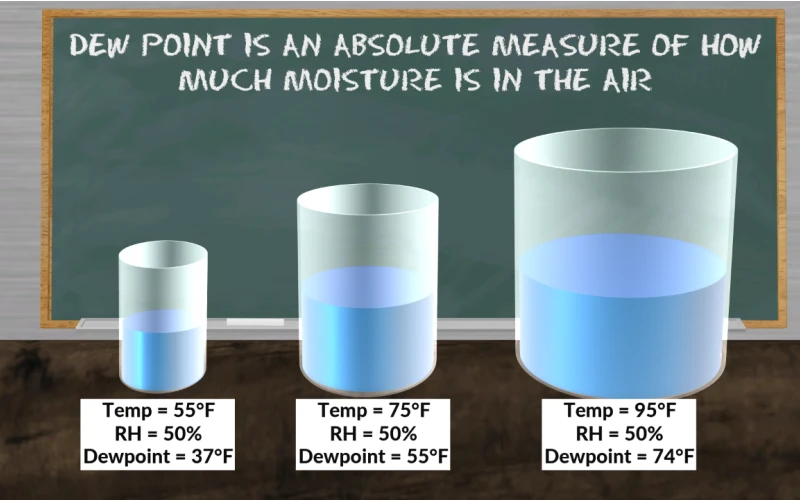
The dew point is the temperature at which air becomes saturated with water vapor, leading to condensation. When we talk about high dew points, we’re referring to conditions where the air holds a significant amount of moisture, making it feel uncomfortably humid. Unlike relative humidity, which changes with temperature, the dew point gives us a more consistent measure of atmospheric moisture.
## How High Dew Points Affect Human Comfort
When dew points rise above 65°F (18°C), most people begin to feel the effects of humidity. At these levels:
– Sweat evaporates more slowly from the skin
– The body’s natural cooling mechanism becomes less effective
– Physical activities feel more strenuous
– Indoor environments may feel stuffy and uncomfortable
As dew points climb above 70°F (21°C), discomfort becomes more pronounced, and above 75°F (24°C), conditions become oppressive for most individuals.
## Health Implications of Prolonged High Dew Point Exposure
Extended periods of high dew points can lead to several health concerns:
### Heat-Related Illnesses
The combination of high temperatures and high dew points significantly increases the risk of:
– Heat exhaustion
– Heat stroke
– Dehydration
– Heat cramps
### Respiratory Issues
Humid air can exacerbate respiratory conditions such as:
– Asthma
– Allergies
– Chronic obstructive pulmonary disease (COPD)
– Increased susceptibility to respiratory infections
### Sleep Disturbances
High nighttime dew points can interfere with quality sleep by:
– Making it difficult to fall asleep
– Causing frequent awakenings
– Reducing deep sleep phases
– Increasing fatigue during waking hours
## Vulnerable Populations
Certain groups are particularly susceptible to high dew point conditions:
– Elderly individuals
– Young children
– People with chronic illnesses
– Outdoor workers
– Athletes and physically active individuals
## Mitigation Strategies
To minimize the impact of high dew points:
### Indoor Environment Control
– Use air conditioning to lower both temperature and humidity
– Consider dehumidifiers in particularly damp areas
– Ensure proper ventilation in living spaces
– Use exhaust fans in bathrooms and kitchens
### Personal Protection
– Stay hydrated with water and electrolyte-rich fluids
– Wear loose, lightweight, and breathable clothing
– Limit outdoor activities during peak heat and humidity
– Take cool showers to help regulate body temperature
### Community Measures
– Check on vulnerable neighbors during heat waves
– Utilize cooling centers in urban areas
– Modify work schedules for outdoor laborers
– Implement heat awareness programs
## Climate Change and Future Trends
As global temperatures rise, we can expect:
– More frequent high dew point events
– Longer periods of oppressive humidity
– Expansion of humid zones to previously temperate regions
– Increased need for climate adaptation strategies
Understanding and preparing for high dew point conditions is becoming increasingly important for maintaining comfort and protecting public health in our changing climate.
Keyword: high dew point